AIMS STEM Digital Innovation & Robotics Lab
Where Ideas Become Real Technology
“Our students learn by building. From robots and intelligent sensors to AI, IoT and community-focused technology, the AIMS Digital Innovation & Robotics Lab is designed to transform curiosity into practical engineering skills.”
Seeking Organizational Sponsorships & Hardware Support
AIMS is actively seeking CSR technology partners, hardware sponsors, and tech equipment grants to provide our 40+ student innovators with physical robotics kits, microcontrollers, sensors, and maker tools.
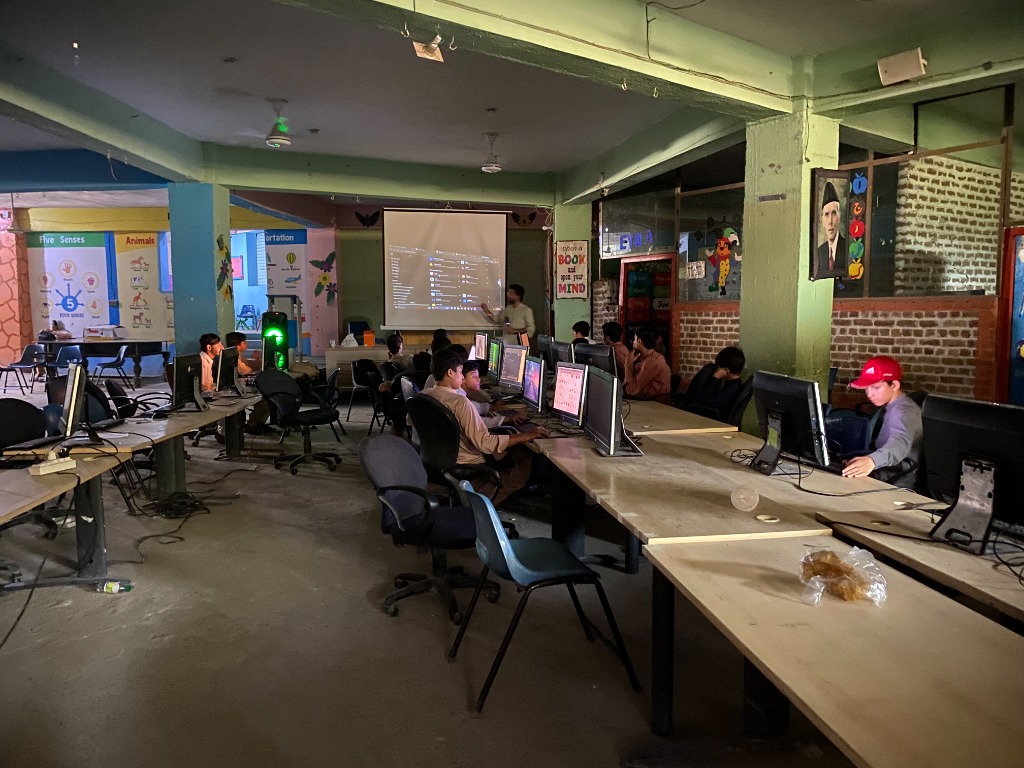
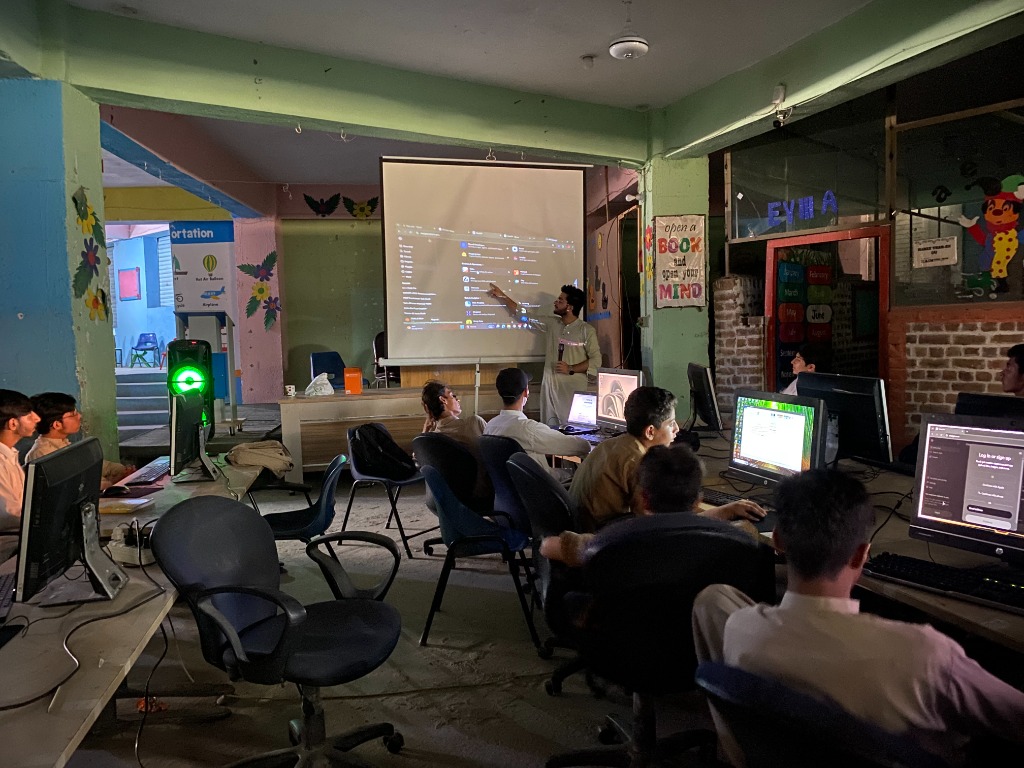
Students actively programming, building circuits, and collaborating on real hardware engineering solutions.
Inside the Robotics Architecture
Students at AIMS design modular hardware frameworks where mechanical chassis, embedded controllers, and intelligent feedback sensors communicate in real time.
Integrated mobile rover featuring 4 high-torque DC gear motors, ultrasonic distance sensing array, optical tracking, and low-latency motor drivers.
Learning by Building
“The AIMS Digital Innovation & Robotics Lab provides students with an environment where technology is not only studied — it is designed, assembled, programmed and tested.”
“Students work collaboratively on robotics, electronics, embedded systems, AI, IoT, environmental sensing, automation and engineering prototypes while developing problem-solving, teamwork and research skills.”
Beyond Textbooks
Direct exposure to tangible hardware, breadboards, and real microcontrollers.
Teacher-Supervised
Experienced mentorship ensuring academic rigor, safety, and ethical engineering.
Volunteer-Supported
Driven by dedicated educators, alumni, and tech enthusiasts passionate about youth STEM.
Iterative Prototyping
Encouraging experimentation, identifying faults, and refining working solutions.
Core Innovation Disciplines
Students engage in multi-disciplinary technical tracks designed to bridge modern scientific theory with practical maker skills.
Robotics
Building and programming mobile robots, robot mechanisms and intelligent systems.
Electronics
Working with circuits, sensors, motors, motor drivers, microcontrollers and electronic components.
Programming
Python, web technologies, embedded programming and software development.
Artificial Intelligence
Exploring computer vision, intelligent systems and practical AI applications.
IoT & Smart Systems
Connecting sensors, devices and microcontrollers to build intelligent connected solutions.
Sensors & Embedded Systems
Arduino, ESP32, microcontrollers, environmental sensors and real-time data collection.
Automation
Learning how controllers, actuators, sensors and intelligent machines work together.
Prototyping & Making
Turning ideas into physical prototypes through electronics, fabrication and iterative design.
Technology for Community Impact
Developing solutions for local challenges including environmental monitoring and resilience.
The Engineering Cycle
Real engineering is an iterative journey. Students follow a structured 6-phase framework from problem discovery to final sharing.
Discover
Identify a problem or learn a new technology.
Design
Plan the system, circuit, robot or solution.
Build
Assemble hardware and develop the software.
Test
Measure performance and identify problems.
Improve
Refine the prototype through iteration.
Share
Document, demonstrate and communicate the project.
AIMS Student Robotics & Projects
Physical autonomous rovers, robotic arms, smart agriculture systems, and environmental nodes built by students.
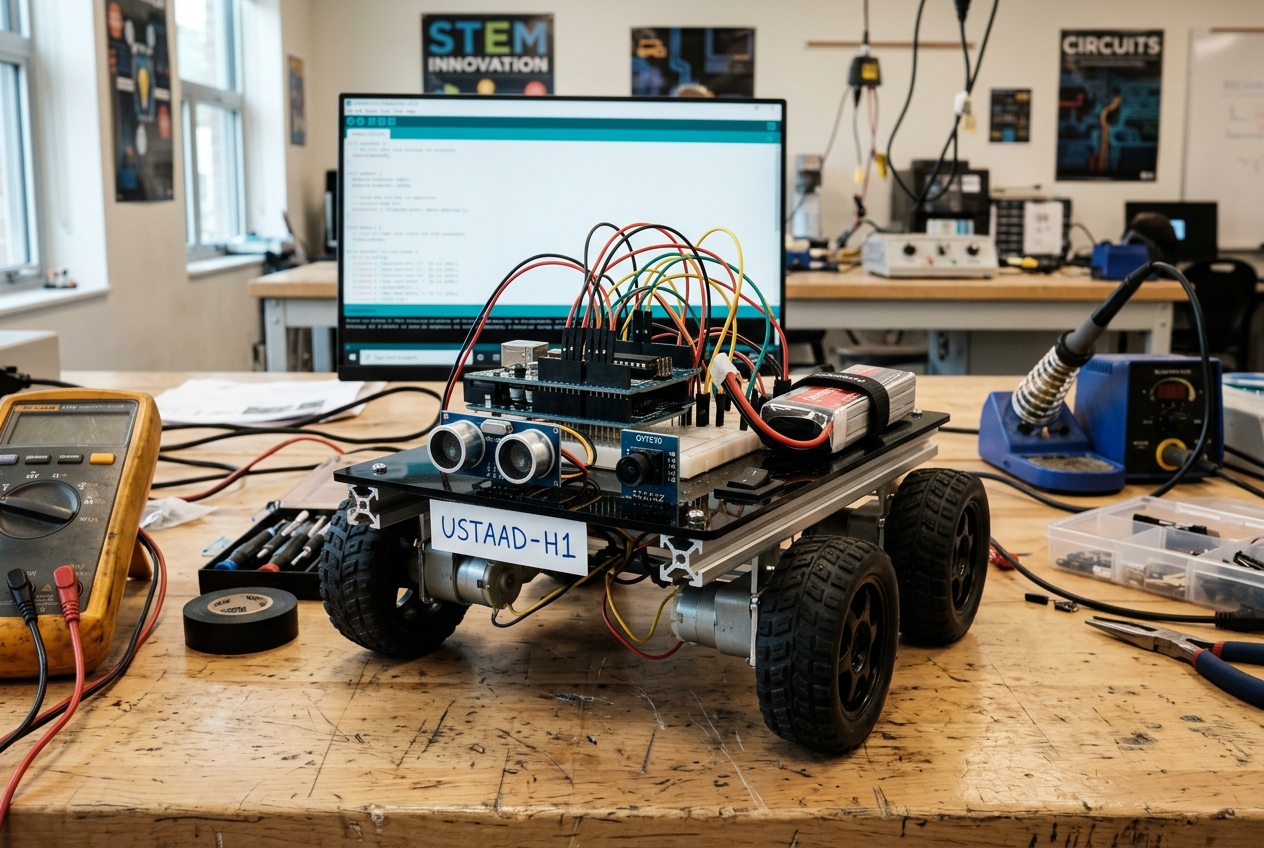
USTAAD-H1
Autonomous Mobile Robotics Platform
“A student-led robotics project exploring mobile robotics, sensing, intelligent control, embedded electronics and practical engineering design.”
• 4WD mobile chassis with independent DC gear motors and differential speed control
• Dual-head ultrasonic obstacle detection & collision avoidance state-machines
• Onboard camera bracket ready for computer vision and optical line-following
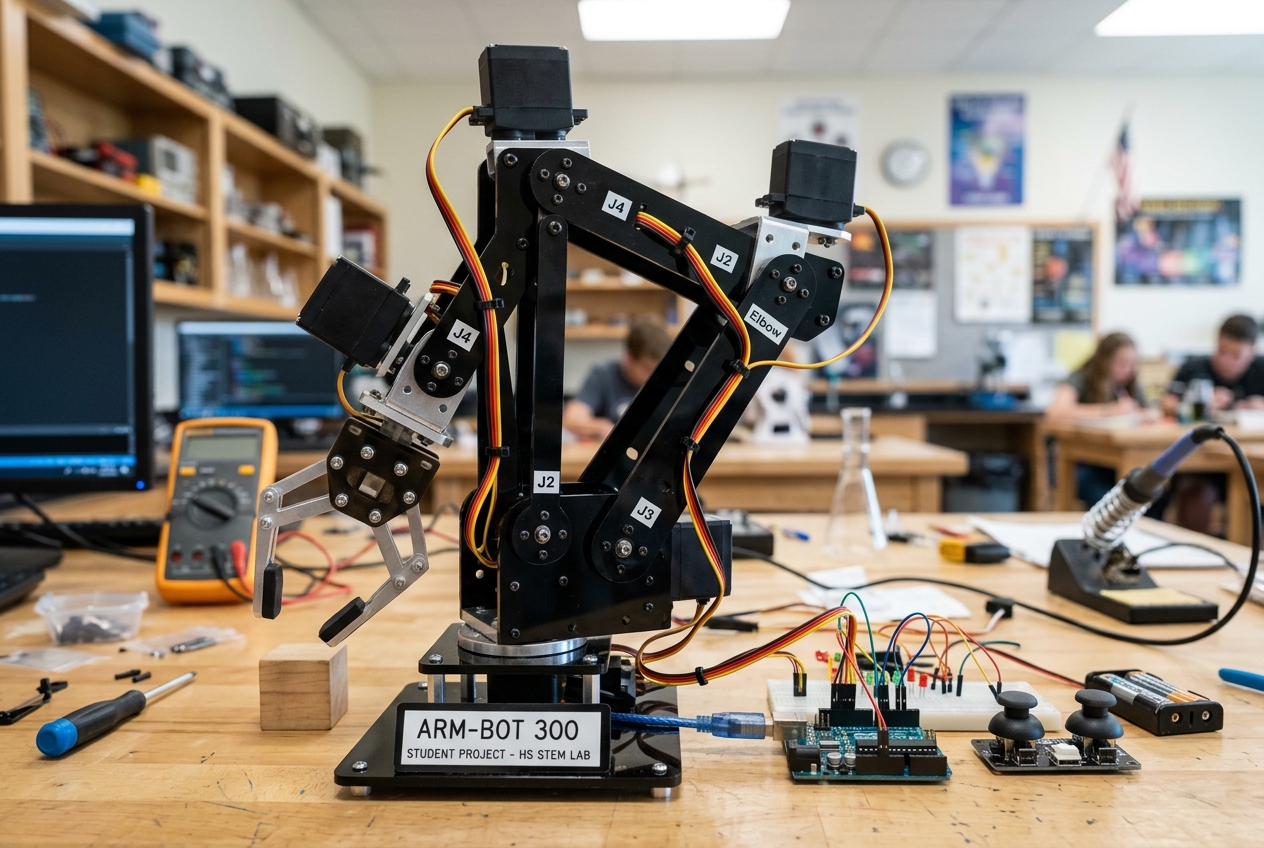
ARM-BOT 300
4-DOF Precision Robotic Manipulator
A multi-axis articulated robotic arm designed and wired by students to study forward kinematics, precision servo actuation, and automated pick-and-place routines.
• 4 degrees-of-freedom with metal-gear servo motors at shoulder, elbow, and wrist joints
• Parallel mechanical claw gripper with rubberized pads for object manipulation
• Dual analog joystick input controller with automated sequence recording
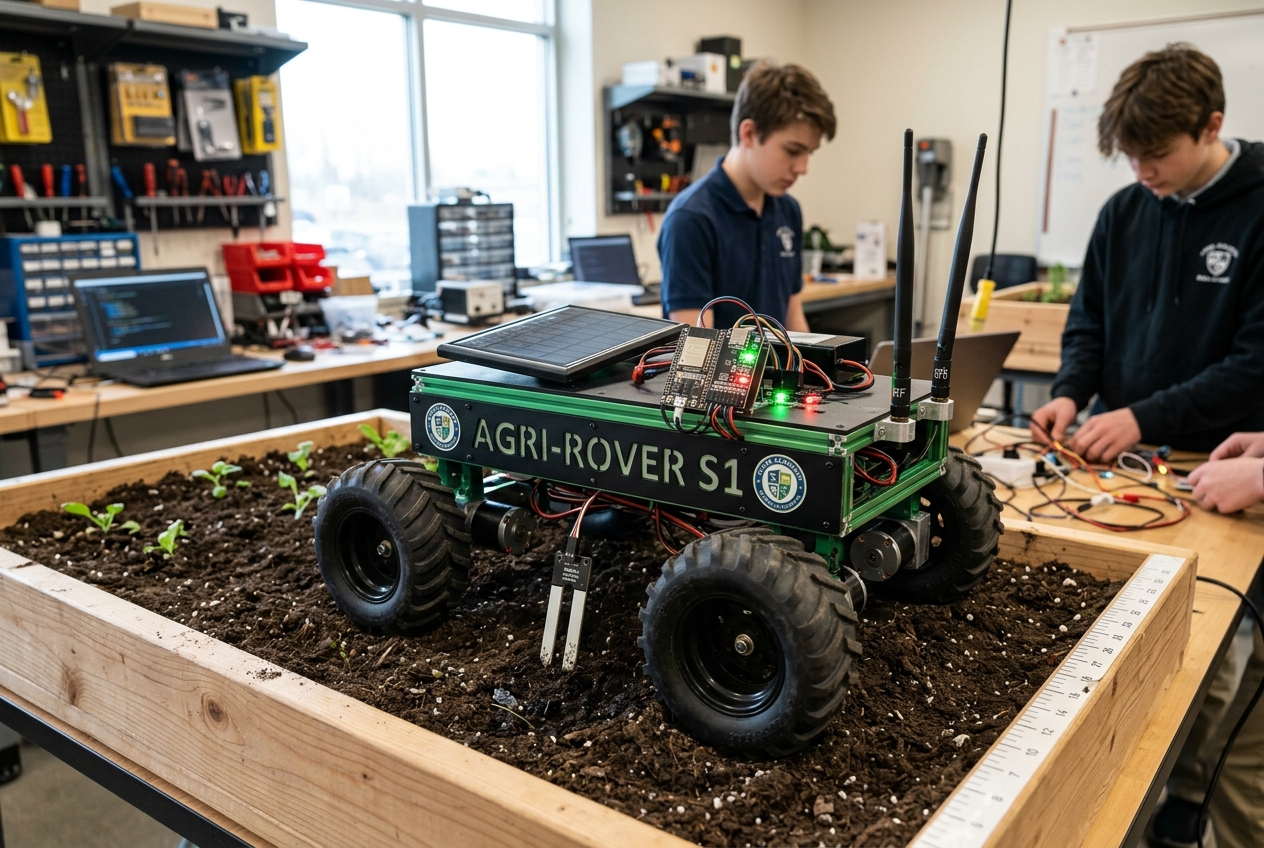
AGRI-ROVER S1
All-Terrain Smart Soil Sensing Rover
A rugged agricultural rover designed to navigate field soil testbeds, collect real-time moisture & pH data, and transmit crop environmental telemetry back to student computers.
• Heavy-tread rubber tires with reinforced suspension for uneven soil terrain
• Dual-prong capacitive soil moisture probe and ambient temperature telemetry
• Top-mounted mini solar panel providing auxiliary power for wireless ESP32 broadcast
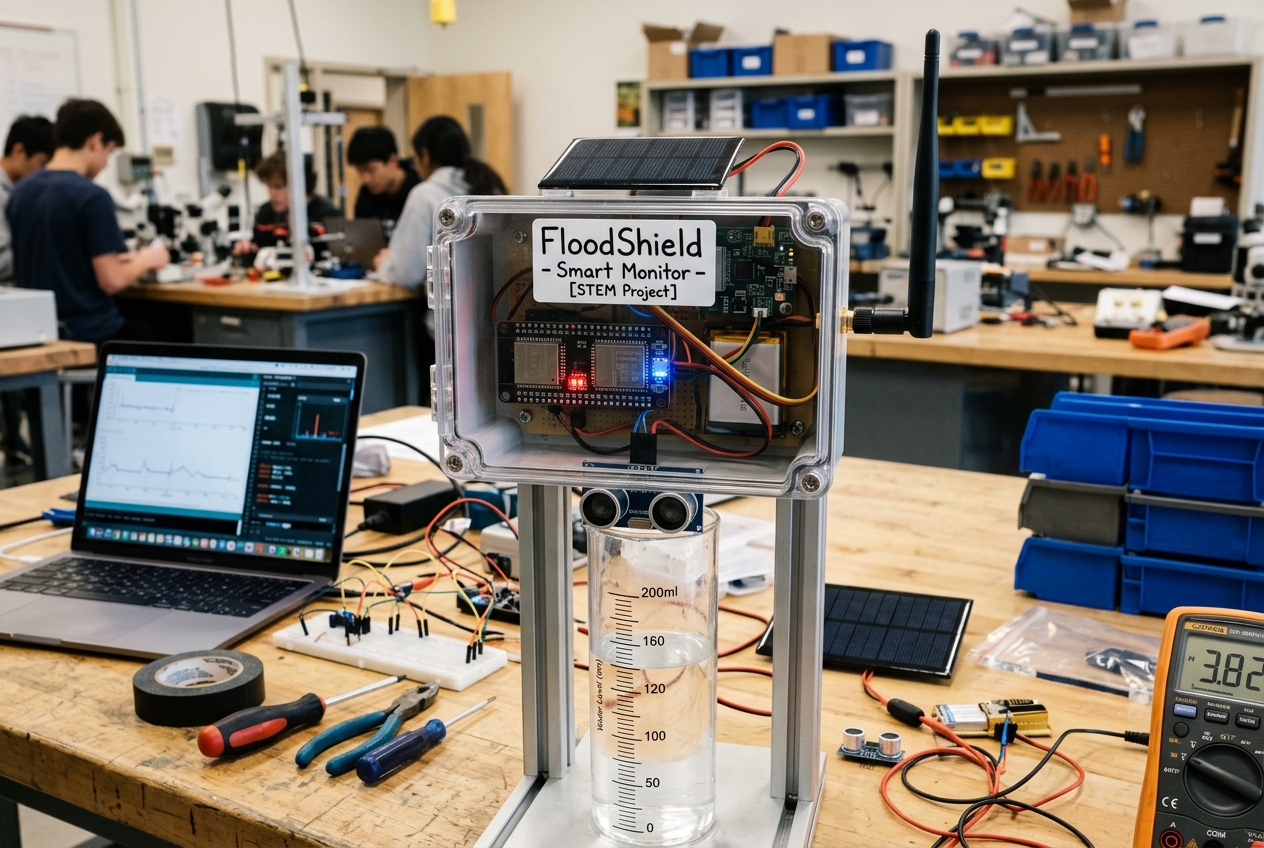
FloodShield
Smart Environmental & Flood Monitoring Concept
“A student technology initiative exploring affordable sensors, environmental monitoring, IoT and early-warning concepts that can help students understand how engineering can address real community challenges.”
• Water level detection using contactless ultrasonic and hydrostatic sensing
• ESP32 microcontroller telemetry broadcasting status alerts to cloud dashboard
• Designed to teach students how technology can mitigate local flood risks in the Malakand basin
Next Robotics Concepts in Student Development
Upcoming student prototypes include AEROBOT-X1 (autonomous quadcopter flight & telemetry controller) and CYBER-HEX 6 (biomimetic hexapod walking robot with multi-servo gait coordination).
Technologies We Explore
Real hardware, microcontrollers, embedded electronics, and software platforms used in the lab.
Inside the Lab
Photographs, hardware prototypes, and student workbenches from our technology sessions.
Interactive Tech Lecture
Click to enlarge 🔍
Student Computing Stations
Click to enlarge 🔍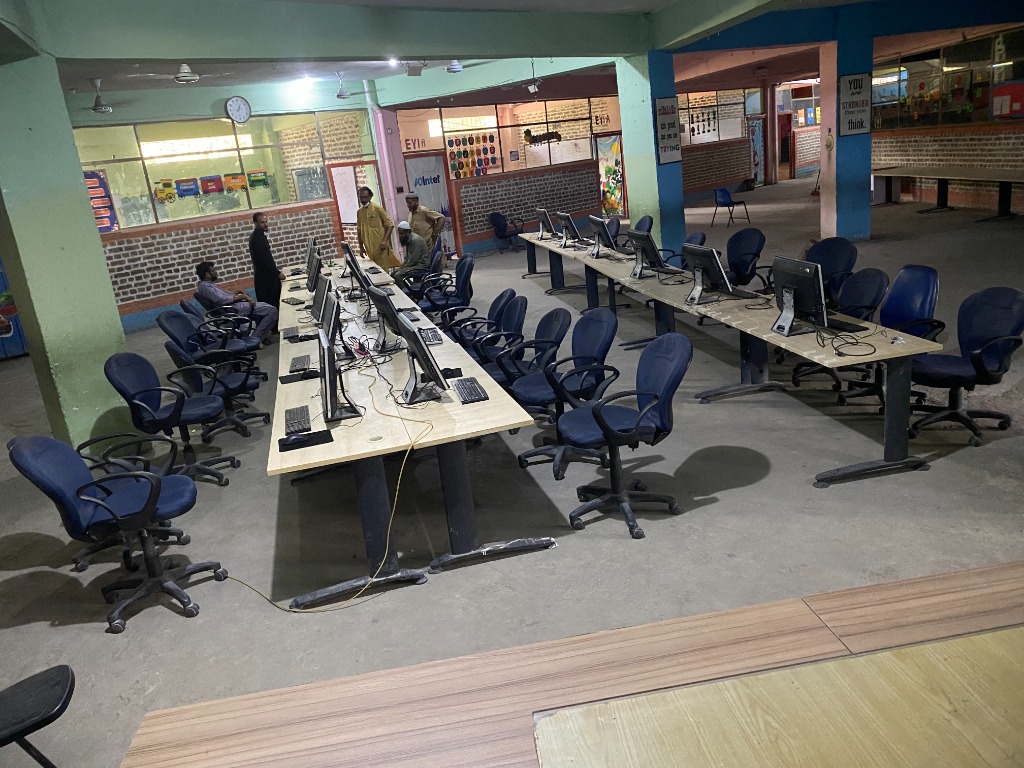
Lab Workstations & Setup
Click to enlarge 🔍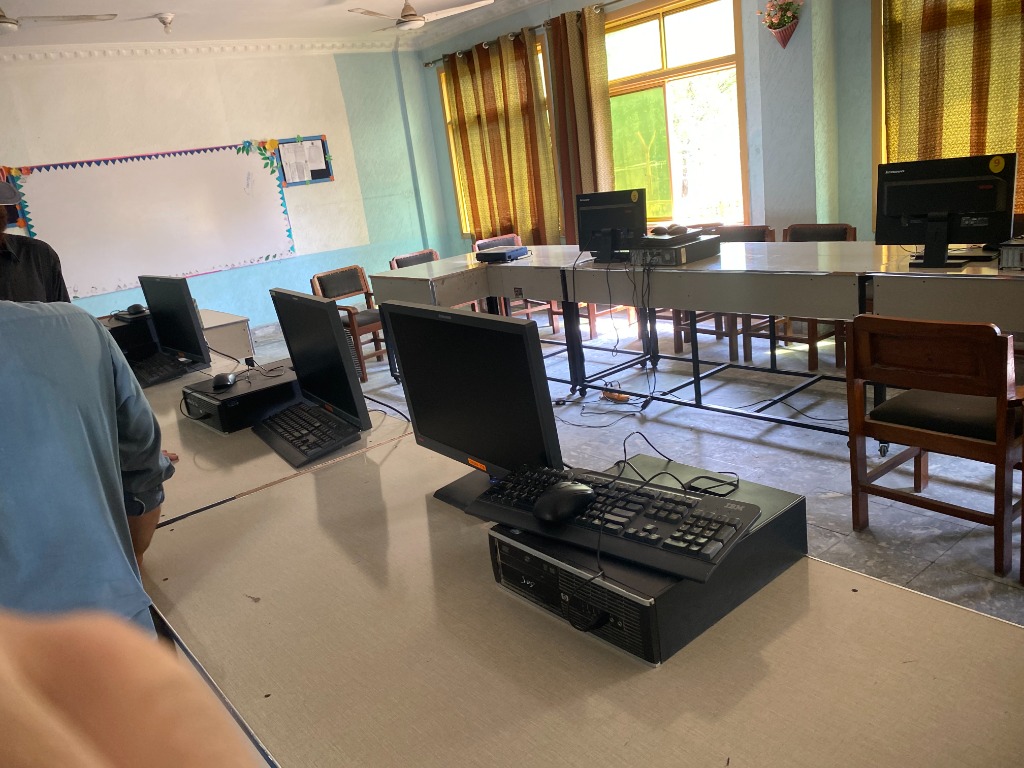
Hardware Testing Stations
Click to enlarge 🔍
USTAAD-H1 Robotics Rover
Click to enlarge 🔍
ARM-BOT 300 Manipulator
Click to enlarge 🔍
AGRI-ROVER S1
Click to enlarge 🔍
FloodShield IoT Node
Click to enlarge 🔍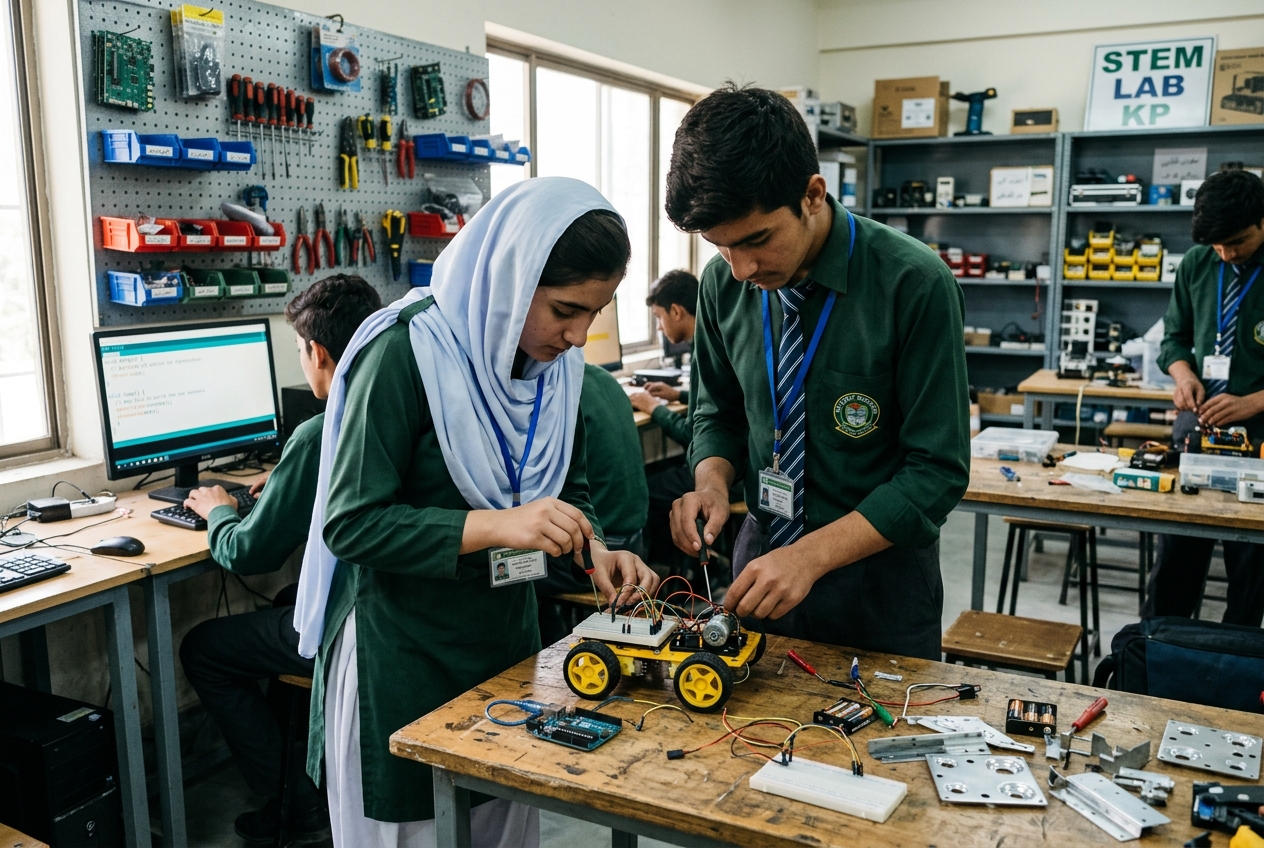
Robotics Hardware Build
Click to enlarge 🔍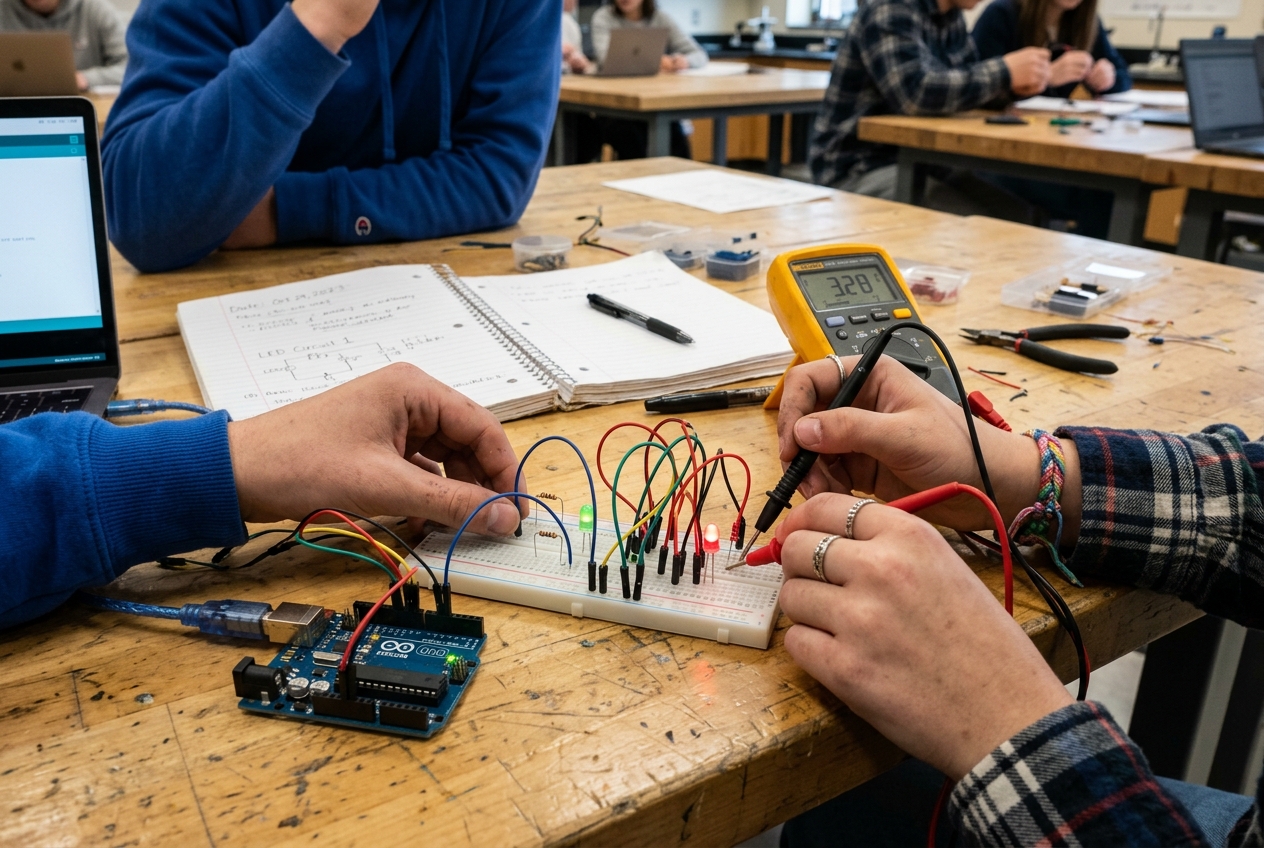
Electronics Breadboarding
Click to enlarge 🔍
From Curiosity to Creation
“The Digital Innovation & Robotics Lab encourages students to ask questions, experiment, make mistakes, solve problems and turn ideas into working prototypes. Every project is an opportunity to develop technical ability, creativity, leadership and confidence.”
Core Competencies Developed
Help Students Build the Future
“Our students already receive learning, guidance and supervision. The greatest limitation is access to physical technology and reusable laboratory hardware.”
“AIMS welcomes responsible educational partnerships and sponsorships that can expand student access to robotics kits, microcontrollers, sensors, motors, electronics, computers, prototyping equipment and maker tools.”
Priority Hardware Sponsorship Categories:
Robotics Hardware
4WD chassis, DC gear motors, servo actuators, motor driver boards (L298N) & robot wheels.
Microcontrollers & IoT
ESP32 SoC modules, Arduino Uno/Nano boards, Raspberry Pi units & environmental sensor kits.
Workbench Tools
Soldering irons, digital multimeters, power supplies, breadboards & wiring accessories.
Workstations & Gear
Monitors, desktop PCs, maker equipment, 3D printing supplies & programming peripherals.
AIMS operates with complete educational transparency. All sponsorships and hardware contributions directly serve supervised student learning and engineering innovation in Malakand.
Ready to Build Something?
“Students interested in technology, robotics, AI, electronics and real-world problem solving are encouraged to become part of the AIMS innovation community.”